
Rapid Feasibility Case Study

Context
An organisation was considering a major facilities and infrastructure investment involving significant capital and long-term commitments.
Early design conversations had begun, but no formal feasibility testing had been completed.
Symptoms
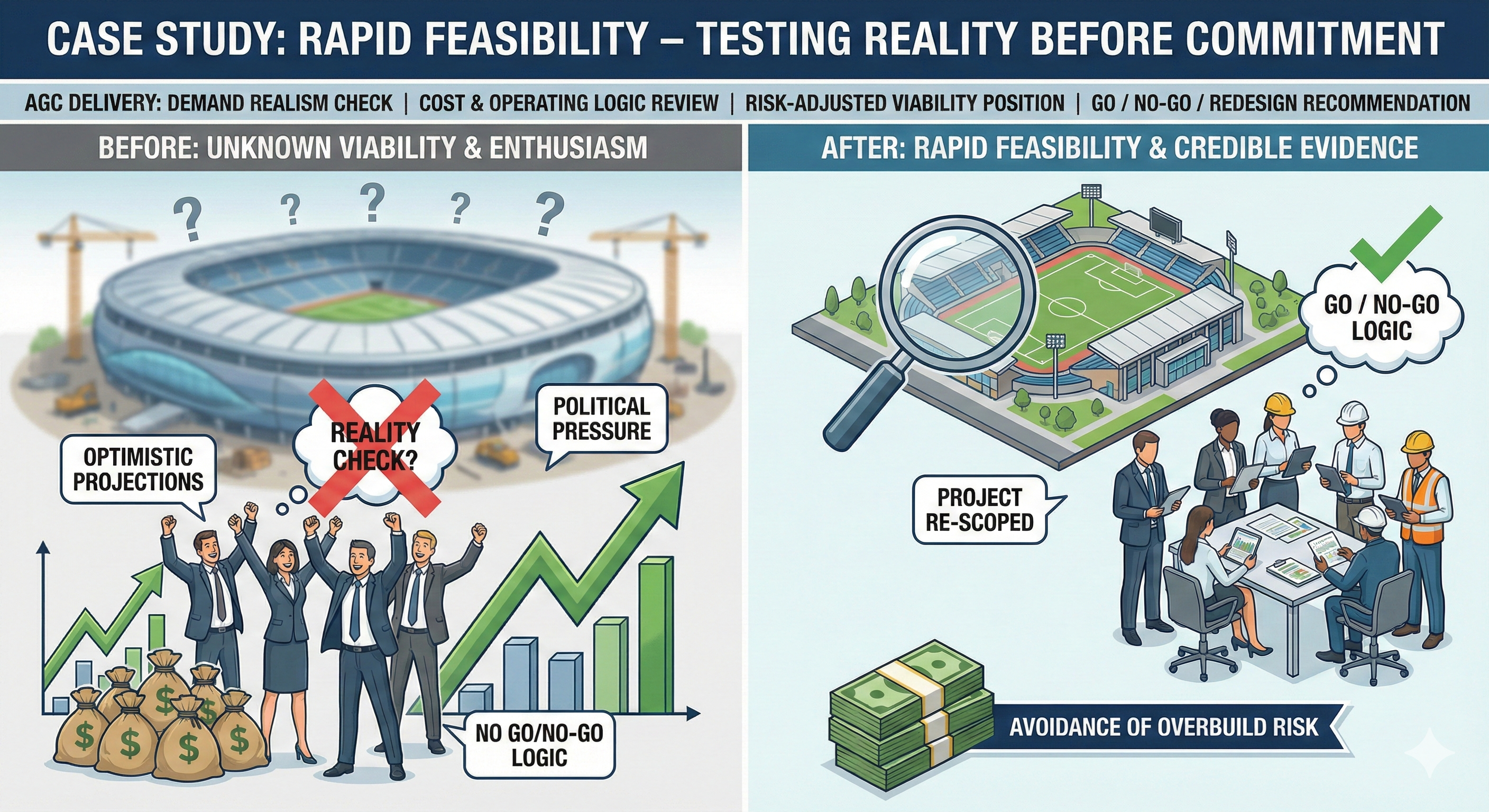
• Enthusiasm driven by concept visuals rather than evidence
• Unclear funding and delivery model
• Assumptions around utilisation and demand
• External pressure to progress quickly
Diagnosis
AGC conducted a Rapid Feasibility to determine whether the project should proceed.
The diagnostic examined:
• go / no-go viability
• scope realism
• funding and delivery options
• critical risks and dependencies
The findings revealed material gaps between ambition and viability.
Prescription
AGC recommended a pause and re-scope.
Proceeding under the original assumptions would have locked in structural risk.
Delivery (Where Warranted)
Once feasibility was confirmed under a revised scope, AGC supported controlled progression.
Outcome
• Capital exposure avoided
• Realistic scope defined
• Decision-makers protected from premature commitment
• Confidence restored through evidence
Why This Matters
Most infrastructure failures are decided before ground is broken.
Rapid Feasibility ensured this decision was made with eyes open.
Governing Diagnostic
Rapid Feasibility
When to Use This Diagnostic
• Before committing capital
• Before design or procurement
• When pressure exists to “just start”